February has always felt different from the other months. Shorter, yes. But not smaller. If anything, it feels condensed. Concentrated. As if the calendar itself decided to speak more quickly and mean more.
There is something about a month that knows it will not last long. So, for this month, the theme felt obvious: Fleeting. According to the Oxford English Dictionary, fleeting means “lasting for a very short time.” But beyond the formal definition, fleeting is not simply about brevity.
It is about intensity. It is about something arriving fully formed, burning brightly, and leaving before you have time to prepare for its absence. February embodies that. It is the month most associated with love. With Valentine’s Day.
With pink and red and heart-shaped reminders to pause and feel something. And yet, it is also the month that disappears first. Twenty-eight days. Occasionally twenty-nine.
A built-in reminder that time does not distribute itself evenly. There is something almost poetic about love being housed inside the shortest month. Love rarely asks permission to arrive.
It does not check calendars. It does not wait for readiness. It comes the way winter sunlight does. Sudden, slanted, and startlingly warm against the cold. And just as quickly, it shifts. Not always in loss. Not always in heartbreak. Sometimes simply in transformation. In evolution. In the quiet way feelings deepen or soften or change shape. Fleeting does not always mean gone forever.
Sometimes it means passing through. February carries that tension beautifully. It begins in the heart of winter. Stark, bare, cold. And yet it is often where we first sense the coming shift toward spring. It is the hinge.
The breath between. And then there is the leap. Every four years, February quietly adds a day. A single extra offering.
A small defiance of its own limitation. A reminder that even what is brief can expand. That what seems fixed can surprise us. That feels like love too. Brief, bold, beautifully timed.
Borrowing hours. Borrowing heartbeats. Leaving its imprint even when it cannot stay. What strikes me most about fleeting things is how deeply they mark us.
A short conversation that changes direction. A moment of clarity that rearranges perspective. A relationship that lasted months but altered years.
Length has never been the sole measure of impact. Sometimes the shortest months hold the most concentrated meaning. Sometimes what lasts only briefly strengthens us in ways the longer seasons never could. February does not apologize for being short. It does not try to stretch itself thin to match the others. It arrives. It gives what it gives. And it leaves. And then, eventually, it returns. There is comfort in that rhythm.In knowing that even what disappears can reappear in new form.
That love, like the month, has a way of stepping back from behind its winter curtain. Brief. Bold. And beautifully fleeting.
Poem of the Month
by me
A Leap like A Month
Fleeting the way that love comes in unbidden,
arriving with frost still caught in its hair,
the shortest of gifts, half-given half-hidden,
gone before you could say it was there.
It does not ask permission to enter,
it counts out its days on uncertain hands,
it burns at its brightest in the coldest of winter,
then melts before anyone quite understands.
Fleeting, the way it first touched without warning,
a breath between two longer and emptier years,
fleeting like light on a pale winter morning,
fleeting like laughter that surfaces through tears.
Love leaps the way a short month leaps
not asking the calendar’s blessing or leave,
it borrows the hours it borrows the sleeps,
it gives you just enough to make you believe.
Fleeting, yet fuller than anything longer,
the way that a flicker outshines a dull flame,
what lasts only briefly can still make you
stronger,
can still make the world feel entirely changed.
Twenty-eight heartbeats and then it is over,
or maybe this once it is given one more,
a leap of pure grace, like a hand on your
shoulder,
a single day extra, unlocked like a door.
Fleeting but true. Fleeting but certain.
Fleeting like everything worth keeping near.
Love steps from behind its own cold winter
curtain,
and just like the month disappears, then
appears.
Love as the month brief, bold, and beautifully fleeting.
What I’m Currently Working on
To stay updated on my journey and what I’ll be working on next, feel free to visit the Works in Progress Page or follow the Facebook Page, where I share daily updates and fun tidbits.
January has a way of arriving already in motion. There’s no easing into it, no soft landing after December. It opens with momentum, expectation, and the quiet assumption that you should already know what comes next. This January felt especially fast. Not busy, exactly. Just quick.
Like events happened before I had time to give them proper weight. So for this month, the theme felt obvious: Speed. According to Webster, speed is defined as “the rate at which something moves or operates.” But beyond the definition, speed is a feeling.
It’s that sensation of time slipping ahead while you’re still orienting yourself. It’s the realization that moments don’t ask permission before becoming memory. Two things marked this month for me. I turned 31. And I was let go from a job.
Neither moment arrived dramatically. There was no buildup, no soundtrack. Just a quiet shift in circumstance. And yet both carried the same underlying truth: time is moving, whether or not we feel ready for it to.
Birthdays compress years into a single day. They invite reflection, whether you ask for it or not. Thirty-one didn’t feel heavy, but it felt clear.
Clear in the way numbers sometimes are. A reminder that days stack quickly. That two months become two years without ceremony. That life doesn’t slow itself, so we can keep up. Losing a job does something similar. It forces an ending you didn’t schedule. One moment you’re spending time on something, investing energy, imagining continuation. The next, that time is gone. Not reassigned. Just complete. That tension between “too fast” and “too late” is where this month’s poem came from.
Poem of the Month
by me
Speed
Too fast. Too soon. Too late.
Too gone. To move on.
To spend time on.
Too much. Too vast.
Too complex.
Two days.
Two months.
Two years.
One life.
What I’m Currently Working on
To stay updated on my journey and what I’ll be working on next, feel free to visit the Works in Progress Page or follow the Facebook Page, where I share daily updates and fun tidbits.
This post is late. It’s early January as I write this, which feels both ironic and fitting because December, for me, has always lingered. Christmas especially doesn’t end neatly on the 25th. It echoes. It settles.
It asks to be reflected on after the fact, once the noise quiets and what mattered most rises to the surface. So I’m allowing this December post to arrive when it needed to. Not on time, but honestly. When I think about December, about Christmas specifically, my mind doesn’t go to Christmas morning first.
It goes to Christmas Eve. It always has. That night holds a different kind of magic. Quieter, steadier, deeper. It’s the night where time slows just enough for people to find each other again.
According to tradition, Christmas Eve has long been a night of preparation and gathering. Historically, it marked fasting before feasting, waiting before celebration, darkness before light. In many cultures, it’s the night families come together. Sometimes more intentionally than on Christmas Day itself.
It is anticipation embodied. But beyond tradition, Christmas Eve is personal. It’s the night where everyone is there.
Where travel pauses. Where obligations soften. Where family, however defined, occupies the same physical space and, for a few hours, the same emotional one. It’s not about gifts, really. It’s about presence. For me, Christmas Eve evolved over the years, but its importance hasn’t diminished. The faces around the table have changed. The houses have changed. I’ve changed. But the feeling, that collective pause, that sense of this matters has stayed remarkably intact. There’s something sacred about a night that asks nothing of you except to show up. Charles Dickens once wrote, “I will honor Christmas in my heart, and try to keep it all the year.” I think Christmas Eve is the doorway to that practice.
It’s where intention is set. Where gratitude is felt before it’s expressed. Where love is made visible not through grand gestures, but through proximity. And maybe that’s why Christmas Eve often feels heavier with emotion. It carries memory. It carries absence. It carries hope.
It’s the night where those we miss are felt most strongly and where those we still have feel more precious.
As I’ve gotten older, I’ve come to understand that Christmas Eve isn’t about recreating a perfect tradition. It’s about honoring continuity while allowing evolution. It’s about recognizing that togetherness itself is the gift that the act of gathering, of choosing each other for one intentional event, is enough. That realization inspired the story attached below.
I wanted to give Christmas Eve the spotlight she rarely receives. To personify her. To honor the quiet labor she performs year after year. Bringing people home to each other, creating space for connection, doing the unseen work that makes celebration possible.
This story is not about Santa or spectacle. It’s about service. About anticipation. About the sacred power of preparation and presence. About the night that holds us before the morning arrives.
So this December, late as it is, I offer gratitude for Christmas Eve. For family, however imperfect. For togetherness, however brief. For traditions that adapt instead of break.
And for the nights that ask us only to be.
Story of the Month
by me
The Visit of Christmas Eve
A Tale for the Season
I must tell you of Christmas Eve, though you think you know her already. You have marked her on your calendars, circled her in red, anticipated her arrival with the eagerness of children awaiting gifts. But I tell you truly, you do not know her at all.
She is not what you imagine.
While the great Santa Claus receives all the world’s attention, all its songs and stories, all its wonder and belief, Christmas Eve moves through the darkness like a whisper, like a held breath, like the space between heartbeats. She is discreet where he is jolly. She is mysterious where he is known. She is unsung, and perhaps just perhaps that is precisely as it should be.
For Christmas Eve does not come with fanfare.
She arrives in the afternoon’s fading light, when shadows grow long, and the world begins to slow its frantic pace. She slips through doorways left slightly ajar, moves along streets where lights begin to twinkle, touches the frost on windows with fingers gentle as prayer. She brings with her no bag of toys, no reindeer bells, no Ho-ho-ho to announce her presence.
What does she bring, you ask?
Preparation. Anticipation. The subtle magic of becoming.
Where she walks, hearts begin to open. Old grievances seem suddenly small. Family members traveling from distant places find their journeys smoothed, their impatience transformed to eagerness. In kitchens, hands that have been hurried all day slow their work, finding rhythm and even joy in the rolling of dough, the stirring of pots, the setting of tables with care.
This is her doing, though none credit her for it.
Christmas Eve touches the child who cannot sleep and whispers, “Rest will make tomorrow sweeter.” She steadies the father’s hand as he assembles the bicycle in the garage at midnight. She guides the mother who wraps the last gift with tears in her eyes, remembering her own mother who did the same. She settles over households like a blanket, bringing with her a peculiar peace, not the peace of silence, but the peace of rightness, of things falling into their proper places.
She is the curator of togetherness, the architect of gathering.
Watch her work, if you can catch sight of her at all. See how she moves through the grandmother’s house where three generations will soon arrive, adjusting a picture frame here, straightening a wreath there, her presence ensuring that every detail speaks of welcome. Observe her in the humble apartment where a single parent has done their best with little, how she makes the simple decorations glow with worthiness, with enough-ness.
Christmas Eve knows a secret that Santa, for all his magic, does not: the gift is not in the giving alone, but in the space created for giving to occur. She is that space. She is the pause before the celebration, the breath before the song, the darkness that makes the morning light so precious.
And yet, and here is the peculiar sadness of her station, the night does not belong to her.
It belongs to the families she has prepared. It belongs to the children she has helped to settle. It belongs to the lovers who walk hand-in-hand through snow-dusted streets, to the friends who gather for cocoa and carols, to all the souls she has gently guided toward each other. She creates the conditions for bonding, for feasting, for festivities and games and laughter, for the spreading of that particular fullness that only this night can bring.
Then she withdraws.
She is too humble to remain where she is not the center, too wise to intrude upon what she has helped to create. Unlike Santa, who arrives with spectacle and departs with legend, Christmas Eve simply…fades. She becomes the background hum, the atmospheric blessing, the forgotten architect of the very magic others will remember.
By morning, all will speak of Christmas. Of Santa’s visit, of gifts exchanged, of the meal shared. But who will remember Christmas Eve? Who will credit her patient work, her subtle preparations, her quiet transformation of ordinary hours into sacred time?
Very few. Perhaps none at all.
And yet she returns, year after year, faithful as the turning of the calendar, constant as the winter dark. She asks for no songs, no cookies left out, no tracking of her progress across the globe. She requires no belief to do her work; she simply does it, for the work itself, for the love of what comes after.
So tonight, when the sun sets, and that particular hush begins to fall, when you feel the air change and something inexplicable stir in your chest that is her. That is Christmas Eve, making her rounds, weaving her gentle enchantments, preparing the way for all that is to come.
She is the guiding star of anticipation itself.
She is real, though unheralded. She is present, though unseen. She is the living embodiment of service without recognition, of giving without receiving, of magic worked for its own pure sake.
And if you listen very carefully, in that space between afternoon and night, between the ordinary day and the extraordinary one to come, you might just hear her not speaking, for she is too discreet for that, but breathing. Hoping. Blessing.
Working her quiet wonders while the world waits for someone else entirely.
That is Christmas Eve. That is her story.
And now you know her, just a little better than before.
What I’m Currently Working on
To stay updated on my journey and what I’ll be working on next, feel free to visit the Works in Progress Page or follow the Facebook Page, where I share daily updates and fun tidbits.
November has always held a quiet magic for me, but this one feels especially full. Today marks two years since I posted my very first JustLj blog on November 30,2023, and somehow, this is already my third November writing here. It’s strange and grounding all at once, like standing in a doorway where the past and present overlap. Anniversaries have a way of making you pause. To look back. To look around.
To look inward. So, for this November, the theme seemed obvious: Two Years. A celebration. A reflection.
A thank you. According to the Oxford English Dictionary, an anniversary is “the yearly recurrence of a date marking a notable event.” But beyond the formal definition, anniversaries are markers of becoming. They show us who we’ve been and hint at who we’re becoming. And two years feels like its own important milestone: not quite new, not quite old, but rooted.
These past two years of blogging have been exactly that for me. An ongoing practice of rooting myself. Of returning here every month and being honest. Of letting this space grow with me, shift with me, wobble with me, and strengthen me.
It hasn’t always been easy, but it has always been real. And woven through November, as always, is the theme of thanks. But this November, gratitude feels deeper, not performative, not seasonal, not obligatory.
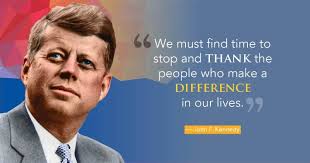
It feels earned. Because this year held a lot. Career turns and unexpected opportunities. Rejections that stung more than I admitted. Moments of alignment that reminded me of possibility. Loneliness, clarity, hope, rebuilding. And through it all, writing remained my constant. As JFK once said,
So I’m taking a moment to thank the version of me from two years ago who started this. The version who didn’t know this would go, but trusted themself enough to begin. The version that showed up again the next month, and the next. And the version of me today, still here, still writing, still learning how to be soft and strong at the same time. And to you, whoever is reading this, whether for the first time or the fifteenth. Thank you. Your presence, quiet or enthusiastic, is part of the meaning of this space. You are part of the longevity.
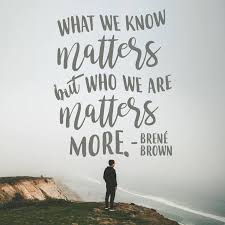
Part of the reason I keep coming back. Brene Brown said,
This blog has helped me understand who I am a little better every month. That is something worth celebrating. So here’s to two years. My second anniversary, my third November, my ongoing becoming. Here’s to gratitude that stays.
Here’s to stories that continue.
Here’s to year three on the horizon. Thank you for being here. Thank you for being part of JustLj. And thank you, November, for marking it all.
Poem of the Month
by me
November Again
November
I hold close every warming ember
Turning the year over toward November
November
The past and future meet where I remember
Breathing in gratitude for another November
What I’m Currently Working on
To stay updated on my journey and what I’ll be working on next, feel free to visit the Works in Progress Page or follow the Facebook Page, where I share daily updates and fun tidbits.
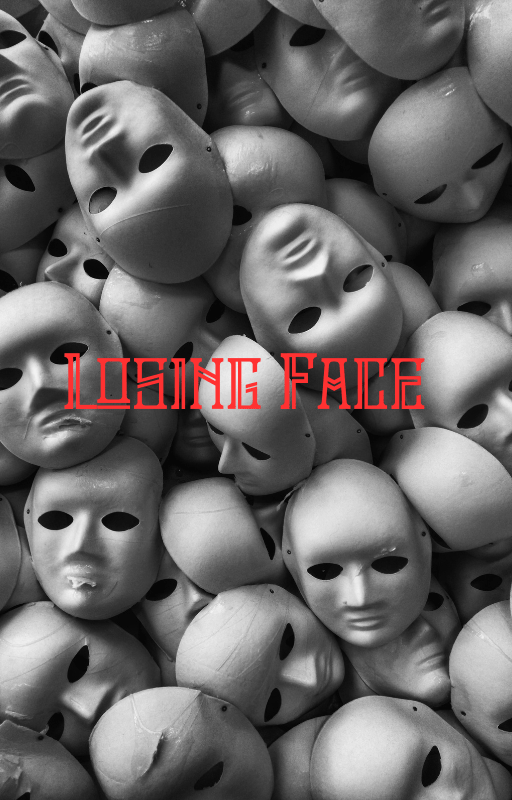
October crept in with a chill that wasn’t just in the air. It was in the atmosphere. The kind that makes you think about what you show, what you hide, and what lingers underneath it all. Maybe it’s the Halloween of it, or maybe it’s something deeper. Either way, this month asked me to think about masks. Not the kind made of cloth or plastic, but the kind we wear without realizing it.
We all wear them, don’t we? The “I’m fine” mask. The “I’ve got it together” mask. The “don’t worry about me, I’m strong” mask.
They start out as small protections. Tiny performances to make the world easier to face. However, if you wear them for too long, they stop being costumes and start becoming a part of your skin. That’s what I wanted to explore this month with my story at the end of this blog. It’s a horror story on the surface, but underneath, it’s about something hauntingly human: what happens when we lose ourselves trying to please everyone else.
According to Merriam-Webster, a mask is “a covering for the face used for disguise or protection.” And that definition says it all. Disguise or protection. Sometimes both.
We use masks to hide our pain, to shield our vulnerability, and to curate how others perceive us. They make us feel safe, seen, or sometimes invisible, depending on what we need at the time. But like any good disguise, the danger lies in forgetting there’s a real face underneath.
This month, I’ve been thinking a lot about my own masks. The parts of me that shift depending on where I am or who I’m with. The teacher mask. The artist mask. The “I’m fine” mask when I’m not. There’s a strange comfort in them: they help us survive, adapt, and connect. But they can also silence us. They can make us forget that authenticity isn’t a performance, it’s a practice.
And that practice takes courage. Because taking off a mask isn’t as simple as removing it. Sometimes, it’s peeling it. Layer by layer. Sometimes, it’s realizing you’ve worn it so long that your reflection looks wrong without it. Sometimes, it’s looking in the mirror and not knowing who’s underneath. But here’s the truth I’m holding onto this October: Your real face, the one that’s messy, tired, unsure, imperfect, is worth showing.
Even when it feels risky. Even when the world prefers the mask. In my story for the month, “Losing Face,” Maya, the protagonist, learns that hiding behind versions of herself only leads to disappearance. It’s a chilling metaphor, but it’s also a mirror for so many of us. We think we’re protecting ourselves by performing, but over time, we erode our own edges. This month reminded me how important it is to check in with myself and ask: Am I being real, or am I just being who I think they want me to be?
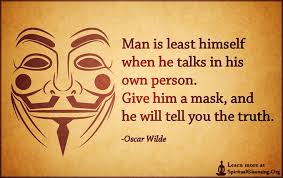
The great poet Oscar Wilde once said,
Maybe he was right in a way. That masks can reveal things that honesty alone can’t. But they can also hide us from the people who deserve to see us most. As October fades and the masks of Halloween get boxed away, I’m trying to take that metaphor to heart. To practice showing up as myself always. To let my real face be enough, even when it feels vulnerable. Especially then. Because the scariest thing about masks isn’t putting them on. It’s forgetting to take them off.
Story of the Month
by me
Losing Face
The mirror knows what Maya tries to hide—
That girl who shifts like water, side to side,
Who shapes herself to fit each watching eye,
Who wears a different face for every lie.
She stood before her glass that Friday eve,
And counted all the masks she’d learned to
weave:
The smile that made her mother sigh relief,
The laugh that buried all her secret grief,
The girl who never cracked, who never bent,
The perfect, pretty, polished one they meant
To see when Maya walked into a room.
She tried them on like choosing her costume
—
First one, then two, then three stacked on her
face,
Each mask a different role, a different place
She’d learned to occupy when people
watched.
And underneath them all, her real self:
botched,
Forgotten, buried deep beneath the weight
Of all these faces she’d learned to create.
Which one tonight? she wondered, standing
there.
But as she reached to smooth her tangled
hair,
Her fingers brushed her cheek and felt—not
skin—
But smoothness, coldness, something hard
and thin.
She looked again and felt her stomach drop.
Her face—her actual face—had seemed to
stop
Existing. In its place: a blank of white,
A smooth expanse like snow, like bone, like
fright
Made manifest in porcelain and air.
She clawed at it, but nothing waited there—
No seam, no edge, no place where mask
would end
And Maya’s face begin. They couldn’t blend
Because her face was gone. Just—gone.
Erased.
The blankness where her features had been
placed
Stared back at her: no eyes, no nose, no
mouth,
Just white, white, white, expanding north to
south.
She tried to scream but had no mouth to
scream with.
Tried to cry but had no eyes to dream with.
Tried to breathe but—could she? Was she
breathing?
She couldn’t tell. Her whole self felt like
leaving,
Slipping through her fingers, through the
floor,
Dissolving into nothing anymore.
Her phone buzzed on the dresser. Twenty
texts.
From Jordan: Where are you? We’re all
preplexed.
From Alex: Party’s starting, please don’t
flake!
From Mom, downstairs: Are you okay, for
heaven’s sake?
And standing there, faceless, voiceless, gone,
Maya understood what she had done—
The years of being different for each friend,
Of twisting, changing, shifting, making her
blend
Into whatever shape they needed most.
She’d worn so many faces like a ghost
Wears different sheets, that underneath the
masks
There was no face at all to do the tasks
Of being Maya, being real, being true.
She’d given all her faces out to you—
To Jordan, Alex, Mom, to teachers, strangers,
Boys she’d kissed, to friends and all the
dangers
That came from wanting desperately to
please,
From bending herself into what would ease
Their comfort, their approval, their demand
—
Until her real face couldn’t understand
How to exist when no one else was watching.
And so it left. Her face. It went. Now mocking
Her from the void where faces go to die
When worn too thin by every different lie.
She stumbled down the stairs, the house a
blur
Of walls and sounds that didn’t comfort her.
Her mother stood there, spatula in hand,
And looked at Maya—tried to understand
The thing before her: daughter-shaped but
wrong,
A body with no face, nothing to belong
To any name or category known.
Her mother screamed. The sound cut to the
bone—
Or would have, if Maya had bones to feel.
But was she Maya still? Was she real?
Without a face to call her own, to mark
Her as distinct, unique, not just some dark
And formless nothing wearing Maya’s
clothes?
Her mother backed away. The kitchen froze
Around them both—time-stopping, breaking,
caught
Between the girl her mother knew and
thought
She’d raised, and this blank creature,
faceless, strange.
Mom, it’s me! she tried to say. No change
Occurred. No sound emerged. No voice
existed
Where her mouth had been. She’d been
enlisted
In an army of the lost, the disappeared,
The girls who wore so many masks they’ve
smeared
Away their real selves underneath the
weight.
Her mother called the police. “Please, don’t be
late,
There’s something in my house, it’s not my
daughter,
It’s—I don’t know—please send someone—”
The water
In Maya’s eyes—except she had no eyes—
Felt hot and thick. A sob without the cries.
Her mother couldn’t see her anymore.
She’d worn too many masks and now the
door
To her real self had closed, had locked, had
sealed
Her out. Her face would not be revealed
Because she’d given it away in pieces,
A little bit to each friend, until it ceases
To be whole, to be hers, to exist at all.
She ran—or did the faceless run or fall?
She moved through streets like wind, like
smoke, like fear,
And everywhere she went, people would
veer
Away from her, would scream or gasp or stare
At the blank horror of her face, the bare
Nothingness where Maya used to be.
At Jordan’s house the party raged with glee
—
Costumes and music, laughter, dancing, light.
Maya stood outside, alone, the night
Pressing around her like a living thing.
She watched through windows, saw them all:
the ring
Of friends she’d built by being who they
wanted,
By suppressing what her own heart haunted,
By swallowing her truths and speaking
theirs.
She saw the girl—was that Samira?—wearing
A mask that looked familiar: Maya’s smile,
The one she used with athletes. And
meanwhile,
Jordan wore a diffrent Maya mask—
The party girl, the wild one. Every task
Maya’d done, each role that she had played,
Was being worn by others, a parade
Of Maya faces that were not her own
Because she’d given them away. She’d sown
Her face in pieces across all her friends
Until there was no Maya. It ends
Like this: a faceless girl outside a party
Where everyone’s wearing the face she used
to be.
She pressed her hands—at least she still had
those—
Against the window glass. In rows and rows,
The party-goers danced with Maya’s faces,
Each one performing, filling in the spaces
She’d occupied with carefully crafted lies.
And none of them could see her. No surprise.
How could they recognize her when they’d
never
Seen her real face? She’d been so clever,
So careful to show each of them a version
Of herself they’d like—a careful immersion
In whoever they needed her to be.
But who was Maya when there was no
“they”?
Who was she when no one watched or
waited?
Who was she before she’d abdicated
Her own face for the faces she could wear?
She couldn’t remember. Standing there,
Faceless, voiceless, disappearing fast,
She tried to reach back to her past
And find a moment when she’d just been her
—
Not performing, not trying to defer
To someone else’s comfort or desire,
Not dampening her own internal fire
To make room for the people around her.
But every memory felt like a blur
Of different Mayas, none of them quite true.
The girl who laughed too loud. The girl who
knew
To stay quiet. The girl who played dumb.
The girl who acted smart. They’d all become
So tangled up together that she’d lost
The thread of who she was beneath the cost
Of being everything to everyone.
And now her face—her real face—was gone.
Erased. Deleted. Lost to the void
Of all the masks she’d carefully deployed.
The glass beneath her hands began to crack.
Not breaking, but responding—fighting back
Against the weight of what stood pressing
there:
A girl-shaped nothing, empty, blank, unfair
In its erasure, in its warning, in
Its horrible reminder that your skin,
Your face, your self—they’re not infinite
resources
To be divided up. There are courses
Of consequence for giving yourself away
In pieces, bit by bit, day after day,
Until there’s nothing left that’s yours alone.
The window shattered. Maya stood,
unknown
And unknowable, in Jordan’s living room.
The music stopped. The party met its doom
As everyone turned, stared, began to scream
At the faceless figure from a nightmare
dream.
Jordan ripped off Maya’s borrowed face—
The mask she’d worn—and it fell into place
On Maya’s blank expanse. But it didn’t stick.
It slid right off, like oil, slippery, slick,
Because it wasn’t hers. It was a copy,
A performance, a mask, and masks are sloppy
Imitations of the truth beneath.
Maya felt something rising like a wreath
Of thorns around her throat—a desperate
sound,
A wordless howl of grief for what she’d
drowned
In years of people-pleasing, of performing.
Of waking every day and transforming
Into whoever everyone else needed,
Until her own needs went completely
unheeded
Even by herself. Especially by herself.
The sound that came was unlike anything
else—
A shriek, a wail, a cry of pure despair
That had no mouth to shape it, only air
And anguish, emptiness and loss and rage
At what she’d done, at what the final page
Of her story might be: a blank space,
A cautionary tale of losing face.
The party guests fled screaming out the door.
But Jordan stayed—perhaps she’d seen
before
The signs that Maya’d struggled, maybe
knew
The weight her friend had carried, pushed on
through.
She picked up all the Maya masks that lay
Scattered on the floor, the ones they’d played
At being, and she held them to the light.
“Is this what you’ve been doing? Every night,
Every day, with all of us? Pretending?
Maya, this” — She gestured to the bending,
Breaking girl-shape standing blank before
her.
“This is what happens when you ignore her—
When you ignore yourself. You’ve given us
So many faces, made such a fuss
About being what we wanted, that you’ve
lost
Your real face. Maya, what’s the cost
Been like? Carrying all these different
versions?
Playing all these roles, these immersions
In whoever we needed you to be?”
The faceless Maya sank down to her knee,
Then both knees, then collapsed there on the
floor,
And Jordan sat beside her. “I wish you’d told
me more.
I wish I’d seen you—really seen you. Not
The masks. But I was comfortable with what
You showed me. It was easy. It was nice.
I didn’t ask for more. I didn’t think the price
You paid was this. I’m sorry, Maya. I’m
So sorry.” Jordan cried, and for a time
They sat there in the wreckage of the party,
Surrounded by the masks—the false, the
artsy,
The carefully constructed lies that Maya
Had worn until she’d made herself a player
With no true character, no solid core.
I don’t know how to be me anymore,
Maya tried to say. And this time, words—
Faint, fragile, quiet as the flight of birds—
Emerged from where her mouth should be. “I
lost
Myself. I gave away too much. The cost
Was everything. My face. My voice. My truth.
I spent so long performing since my youth
That I forgot that I was supposed to be
Someone underneath. There’s no more me.”
Jordan took her hand. “Then we’ll start from
scratch.
We’ll sit here, and you’ll tell me—try to catch
Whatever’s left of Maya, the real girl
Beneath the masks. Let her voice unfurl
Even if it’s small, even if it’s scared.
Tell me something true. Something you’ve
never shared
Because it didn’t fit the mask you wore
With me. Tell me something from your core.”
The faceless girl sat silent for a while.
Then, faint and small, without a mouth to
smile
Or lips to form the words, she spoke a truth:
“I’m tired. I’ve been tired since my youth.
Of smiling when I’m not happy. Of
pretending
That I’m fine when I’m not. Of bending
Myself into shapes I don’t fit. Of being
Strong when I’m breaking. Of freeing
Everyone else to be themselves while I
Stayed silent. Jordan, I don’t want to lie
Anymore. But I don’t know how to stop.
I don’t know who I am without the prop
Of all these masks, these faces, these
personas.
I’m scared that without them, I’m just a loner,
That nobody will like me if I’m real,
That my true self isn’t good enough to feel
Worthy of love or friendship or belonging.”
And as she spoke, she felt it—something
longing,
Something stirring in the blank expanse
Of where her face had been. A second
chance?
Or just the faintest outline, barely there,
Of features forming slowly in the air—
A hint of eyes, uncertain and afriad,
A shadow where a mouth might be,
half-made,
A sketch of nose, of cheeks, of chin, of brow.
“Keep going,” Jordan whispered. “Tell me now
More truths. Tell me things you’ve hidden,
buried,
Swallowed down because you were worried
They’d make you seem less perfect, less ideal.”
And Maya spoke. And speaking what was
real—
However small, however scared, however
Imperfect—seemed to tether her together,
To pull her back from the void she’d fallen in.
“I’m jealous sometimes. I’ve told lies. My skin
Breaks out and I feel ugly. I don’t always
Want to go to parties. Some days
I want to scream at my mother. I’m not sure
What I want to do with my life. The pure
Truth is I’m confused and I’m scared
And I’m lonely even when I’m surrounded.
I’ve dared
Myself to be perfect for so long
That I don’t know how to just be wrong.
Or messy, or imperfect, or just me.”
And with each truth, more of her face would
be
Restored—still faint, still fragile, barely there,
But forming, slowly, in the darkened air.
It took all night. It took confession, tears,
It took admitting all her secret fears,
Her doubts, her anger, all the parts she’d
hidden
To be acceptable, to seem unbidden
By darkness or complexity or pain.
And slowly, slowly, like the gentlest rain,
Her features came back, piece by trembling
piece—
Though changed, somehow. A if the release
Of truth had altered how her face would
form.
This face was softer, less concerned with
norm
And expectation. This face could frown
Or cry or show confusion, could be down
Without apology. This face was real.
And Maya touched it, tried to learn to feel
The angles of her cheekbones, her own nose,
The way her mouth curved, the way it chose
To sit when no one else was watching her.
“It’s strange,” she whispered. “I’m not even sure
This is what I looked like before. It feels
Different. New.” She ran her fingers, peels
Away the tears. “But it’s mine. It’s really mine.
Not borrowed, not performed. I think I’ll find
It’s harder, wearing just my own true face.
People won’t always like it. Some will chase
The other Mayas, the masks I used to wear.
But I can’t do that anymore. I swear
I’ll never wear a mask again. I’ll be
Uncomfortable. Imperfect. I’ll just be me.”
Jordan smiled. “You’ll lose some friends.
Maybe
Some of us can’t handle that. But maybe
Some of us have been waiting all along
For the real you. Maybe we were wrong
To let you hide. Maybe we should have asked
Why you kept your self so carefully
masked.”
The sun rose slowly over Jordan’s house,
And Maya stood before the mirror, doused
In morning light, and looked upon her face—
Her real face, earned back through truth and
grace,
Through painful honesty, through letting
down
The walls, the masks, the performance, the
renown
That came from being everything to all
This face was hers. And if some friends would
call
It strange, or diffrent, or too much, too real,
Then they weren’t friends who’d help her
heal.
She touched her cheek—warm skin, real skin,
no mask—
And thought about the monumental task
Ahead of her: to live each day as herself,
To take her authentic self off the shelf
Where she’d hidden her away for years.
It wouldn’t be easy. There would be tears
And moments when the old urge to perform
Would rise up like a siren, like a swarm
Of voices telling her to shape-shift, hide,
To tuck her real self back away inside
And wear the masks that made life easier,
smooth.
But Maya’d learned the terrible, hard truth:
That masks might ease the moment, ease the
day,
But worn too long, too much, they’d take
away
Not just your face—your actrual, real face—
But all of you. They’d strip you, leave no trace
Of who you were beneath. They’d eat you
whole.
And so she’d carry foward with her soul
Laid bare, her face her own, her voice her true
Voice, even when it shook. She’d muddle
through
With imperfection, mess, and raw humanity.
Better to be real—to just be me—
Than lose yourself to masks you wear for
others.
Better to find the friends who’ll be your
brothers
And sisters in truth, who’ll love you as you
are.
Maya walked home as the morning star
Faded into daylight, and her face—
Her own, true,
earned-back-through-confession face—
Felt strange and new and terrifying and right.
She’d lost her face that one October night.
But in the losing, in the horror, in the void,
She’d learned what mattered: not to be
deployed
In service of others’ comfort, not to wear
A different face for every person there.
The lesson cost her everything to learn:
That masks will take and take, they’ll burn
Away your face, your voice, yourself, your
core,
Until there’s nothing of you anymore.
Be yourself. Your real, imperfect, messy self.
Don’t leave your true face sitting on a shelf
While you perform for others. It’s not worth
The cost. You only get one face from birth—
Wear it. Own it. Let it be enough.
The world may say that you should be more
tough,
More pretty, more compliant, more like this
Or that. Resist. Remember Maya’s kiss
With horror, her encounter with the void.
Your face is yours. Don’t let it be destroyed
By wearing masks for others. Just be true.
The greatest gift you’ll ever give is you.
What I’m Currently Working on
To stay updated on my journey and what I’ll be working on next, feel free to visit the Works in Progress Page or follow the Facebook Page, where I share daily updates and fun tidbits.
September arrived like a test of patience and clarity. It felt like the month wanted to ask me, Do you know what you’re really after? Opportunities came and went, some lifting me, others cutting a little deep. In the swirl of it all, I kept circling back to one word: Alignment.
According to the Oxford English Dictionary, alignment is
“an arrangement in a straight line, or in correct relative positions; a position of agreement or alliance.”
It’s about things fitting together, whether in geometry, in groups, or in life. But alignment is not always about perfection. It’s about honesty. It asks us to notice when something resonates and when something doesn’t, even if rejection or loss is part of the process.
This month, I felt both ends of that spectrum. A job in New Jersey that I had quietly hoped for slipped away. I didn’t have the experience they were looking for. Rejection has a way of echoing louder than acceptance, and I’ll admit it stung. It raised doubts, making me wonder if I had misjudged my skills or if I would ever be seen as enough. However, almost as if it were a balancing act, another offer soon appeared. A position closer to home. On paper, it looked promising, and the fact that they wanted me felt like an ego boost. Proof that someone out there saw my potential. Yet when I sat with it, I realized it didn’t align with the life I’m building right now. Saying no was difficult, but it also reminded me that belonging somewhere doesn’t mean I should belong everywhere. Alignment requires discernment, not just acceptance.
Now I find myself waiting, hopeful, for another opportunity, one that actually feels aligned. The position aligns with my career path, academic studies, and personal values. It’s a waiting game, and waiting is never easy. But this month has taught me that being in alignment doesn’t mean rushing to fill the gaps; it means trusting that the right pieces will meet you halfway. Here are some famous voices that echo this truth:
Im learning that alignment doesn’t guarantee smooth sailing. It doesn’t mean rejection won’t sting or decisions won’t feel heavy. Instead, it gives me a compass. A way to measure if I am moving in step with the person I am becoming. And as September closes, that compass points to patience, self-trust, and the reminder that alignment is not about saying yes to every door that opens, but about knowing which ones are truly mine to walk through.
Poem of the Month
by me
In Line With Myself
I used to chase every spark,
hands raw from holding flames
never meant to keep me warm.
Now I pause at the threshold,
listening
does the floor echo my name?
Does the air carry my breath back whole/
rejection cuts, yes,
but it also carves a path,
a sharper edge of knowing.
Alignment is not applause,
not every nod of approval
it is the quiet click
of self and circumstances meeting
without force.
And if the right door waits,
I will know it not by chance,
but by the steadiness in my chest,
the soft alignment of who I am
with where I’m called to be.
What I’m Currently Working on
To stay updated on my journey and what I’ll be working on next, feel free to visit the Works in Progress Page or follow the Facebook Page, where I share daily updates and fun tidbits.
August slipped away before I could catch it. Perhaps that’s how months pass when your life is in a state of transition. You look up and realize whole weeks have vanished into something new. This month, the rhythm of my summer gave way to syllabi, assignments, and log-in screens.I officially began graduate school at the University of North Texas, pursuing a degree in Library Science with a focus on Children’s and Young Adult Librarianship. It’s still strange to write that out. Me, a grad student. Because if I’m being honest, I never really saw myself as “academic.” My path hasn’t always followed the neat, linear lines of a textbook.
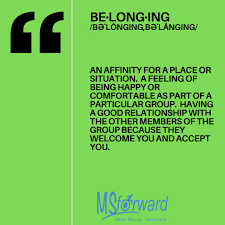
And yet here I am, with discussion boards and readings stacked up next to piles of ready notebooks, stepping into a space that demands more of me than I expected. It’s exhilarating, yes, but it’s also a bit terrifying. Some days, imposter syndrome finds its way into the room before I do, whispering that maybe I don’t belong here. Which is why this month’s word feels so important. Belonging. According to the Oxford English Dictionary, belonging is:
“an affinity for a place or situation; the feeling of being comfortable and accepted.”
It sounds simple, almost effortless, as if belonging just happens the moment you arrive somewhere. But what I’ve learned is that belonging is rarely instant. More often, it’s something you grow into. Or something you create for yourself when the soil feels foreign. That tension is where I’ve been living for the past month.
On one hand, there’s the thrill of grad school: new knowledge, new goals, the possibility of building a life rooted in the things I love most. On the other hand, there’s the ache of dislocation. I miss New Jersey: the friendships, the little routines that grounded me, the confidence I found in navigating a place that once felt strange and then became familiar. I carry those streets and people like a second skin. And yet, I had longed to return to Texas. I wanted the closeness of family, the comfort of being near the people who know me from the ground up.
Coming home felt like it should be the cure to longing. But Texas has greeted me with complexity. Beyond family, the culture doesn’t quite click for me; the energy feels different, sometimes even unwelcoming. So I am caught between two landscapes: one that holds my history and one that holds my heart. Neither feels like a perfect fit, and maybe that’s what belonging really is. The constant negotiation between where you are and who you are becoming.
Maya Angelou once wrote, “You are only free when you realize you belong no place. You belong every. No place at all. The price is high. The reward is great.” I think about that often as I walk through my new routines. Perhaps belonging is less about perfect alignment and more about realizing that no place will ever feel complete without the courage to show up authentically. Brene Brown echoes this: “True belonging doesn’t require you to change who you are; it requires you to be who you are.” That’s hard for me as someone who is still learning to stand fully in myself.
It’s easier to shrink or to question if I’ve earned the right to sit in the spaces I’ve found myself in. But Brown reminds me that belonging doesn’t come from fitting into the mold. It comes from refusing to mold myself into something Im not. And Rainer Maria Rilke offers a softer wisdom: “The only journey is the one within.”Which makes me wonder if belonging is less about the external. City, state, campus, or community. And more about the internal. If I cultivate belonging within myself, perhaps every place I live and every role I take on becomes another layer of that belonging, not the definition of it. So here’s what I know as August closes:
I may not fully belong to Texas, and I may not be as deeply rooted in grad school as I hope to be one day. But I belong to myself, to my values, and to the journey I’ve chosen to take. And maybe, for now, that is enough.
Poem of the Month
by me
I Belong to Me
I am the house I return to,
the key always waiting in my palm.
No city can lock me out,
no classroom can shrink my frame.
I carry my own doorway,
step through, and I am home.
The streets I’ve loved will fade into dream,
their voices stored in my marrow,
but they do not define me.
Even here, where the air feels strange,
my breath makes the map.
I mark the ground with presence,
not permission.
Belonging is not borrowed,
not granted, not earned.
It is grown like a flame in the ribcage,
a quiet fire that refuses to dim.
And when doubt comes knocking,
I light every window,
answer the door with my whole name.
I belong to me,
and in that,
I belong everywhere.
What I’m Currently Working on
To stay updated on my journey and what I’ll be working on next, feel free to visit the Works in Progress Page or follow the Facebook Page, where I share daily updates and fun tidbits.
Patience. I want to sit with that word for a second. Not rush into defining it or dressing it up. Just let it breathe on the page the way I’ve had to let it breathe in my life this month. Patience. It’s not my favorite virtue, and yet it’s the one I keep getting handed. Like an unwanted gift that turns out to be exactly what you needed, even if it didn’t come wrapped in joy or ease or immediacy. Not dramatically. But definitely. What is Patience, anyway?
The word comes from the Latin patiēntia, meaning “the quality of suffering”—which makes it make a lot more sense, actually. Patience isn’t waiting quietly with a smile on your face. It’s enduring. It’s staying when you want to leave. It’s breathing when everything tightens.It’s loving something, or someone, or yourself…even when you don’t have the proof yet that it’ll all be okay. There’s a quote I found that resonated with me:
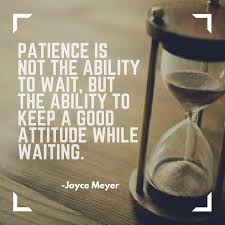
“Patience is not the ability to wait, but the ability to keep a good attitude while waiting.”—Joyce Meyer
However, I’d like to push that a little further. Because sometimes a “good attitude” is just not lashing out. I didn’t give up. I let it hurt and didn’t make it worse. That counts too.
This month, I have been sitting with uncertainty. Big things. Personal shifts. And maybe most meaningfully, I embraced my genderqueerness more boldly than ever before. People I miss.Conversations unfinished. Doors that wouldn’t open, no matter how I knocked.
And you know what? I didn’t kick them down this time. I sat. I sat with the silence and the non-answer. I chose slowness even when I wanted to sprint. I let space exist between me and resolution.
I told myself: “Let it unfold. You don’t need to hold the ending yet.” And that wasn’t always peaceful. But it was patient. I think that counts too. Patience isn’t passive. It’s trust wearing sweatpants. It’s saying, “I still believe in the garden, even when all I see is dirt.” It’s choosing not to scream at the seed.
Poem of the Month
by me
How to Be Patient
Step one: sit with the ache.
don’t ice it.
don’t explain it.
let it be sore, let it breathe.
even if it bruises your pride.
Step two: stop refreshing the page.
the message will come when it comes.
the moment will move when it’s ready.
no amount of checking will make the clock hurry.
Step three: whisper kindness to yourself.
not promises. not platitudes. just
“I’m still here.”
“I’m still learning.”
“I’m still worth it.”
Step four: let life take the long way.
the shortcut never sees the view.
and you are here to witness
not just to arrive.
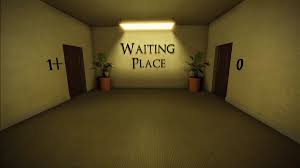
Story of the Month
by me
The Waiting Place
There was once a boy who was always rushing ahead, certain that life was hiding something better just around the corner. One day, he met an old woman sitting beside a still pond. She told him this was the Waiting Place.
“How do I get out?” he asked.
“You don’t,” she said. “Not until you learn to love the pause.”
He sat beside her, angry and aching and anxious, but she didn’t say another word. Just smiled softly, her hands in her lap like she had all the time in the world.
Eventually, he stopped asking.
Eventually, he started listening.
Eventually, the wind changed, the water moved, and he stood—lighter, slower. somewhere wiser.
He turned to thank her, but she was gone. Only her seat remained, still warm.
Im heading into August with the same warmth in my chest. I don’t have all the answers, but I’m staying close to the quiet. Close to the process. Close to myself. Patience isn’t easy, but it’s powerful. And I’m practicing it like a spell.
See you next month.
—Lj
What I’m Currently Working on
These days, my schedule feels like a careful balancing act as I shift from teaching to focusing on writing and refining my craft. I returned to Texas around June 20th, having completed my year of service in New Jersey. I’m no longer tutoring, as that was part of my program at the time. With middle school testing behind me, I find myself eagerly awaiting the start of my graduate school classes at UNT on August 18th. This past year has been quite transformative, and I’m excited to share my plans and the progress I’ve made during this time. To stay updated on my journey and what I’ll be working on next, feel free to visit the Works in Progress Page or follow the Facebook Page, where I share daily updates and fun tidbits.
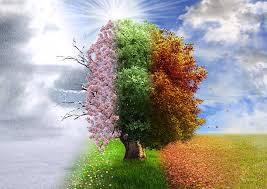
June didn’t crash or crescendo — it shifted. Quietly, slowly, almost imperceptibly at times. But I felt it. In conversations I didn’t force. In moments, I chose to sit with rather than fix. In the way I showed up for others, and maybe more importantly, for myself. This was the kind you notice when you’re brushing your teeth, staring at the ceiling, or standing still in a room that used to feel heavier. June moved me. Not dramatically. But definitely. And in a way that matters.
According to the Oxford Dictionary, to shift means “to change the place, position, or direction of something”— but it also means “to change gears,” “to assume responsibility,” or ” to move subtly in tone or meaning.” It’s a word built for motion, but not always motion you can see. As Maya Angelou once said, ” We delight in the beauty of the butterfly, but rarely admit the changes it has gone through to achieve that beauty.” And bell hooks reminds us, ” Healing is an act of communion.”To shift, then, isn’t just about you. It’s about adjusting in ways that let others breathe. Shifting can be an act of grace. A quiet apology. A new boundary. A softer tone. A deeper truth. A held silence.
This June, the shifts were personal and real. My year of service came to an end— closing a chapter that stretched and shaped me in quiet, relentless ways. I moved back to Texas, returning with more clarity, more softness, and a deeper sense of who I am and who I’m still becoming. And maybe most meaningfully, I embraced my genderqueerness more boldly than ever before. During Pride Month, I didn’t just show up — I showed. I claimed space with both softness and strength, and I wrote it all down. Here’s a poem I shared this June, that still echoes in me:
Shifts are constant. That’s why, over the past two years of writing this monthly blog, a recurring theme has surfaced again and again–under different names like change, growth, and now shift. Each word marks a moment, a feeling, a phase of moving forward, even when the steps aren’t clear or easy. Change and growth have been anchors before, but this shift feels different — more fluid, less about arriving and more about navigating the in-between. It reminds me that to live authentically, we can’t settle. We have to keep moving, even when it’s uncomfortable or uncertain, because that movement is what shapes who we are becoming.
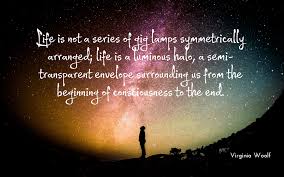
As the poet Rainer Maria Rilke wrote, “Let everything happen to you: beauty and terror. Just keep going. No feeling is final.” This echoes the necessity of embracing shifts — not resisting the tides of life, but flowing with them. Similarly, Virginia Woolf observed, “Life is not a series of gig lamps symmetrically arranged; life is a luminous halo, a semi-transparent envelope surrounding us from the beginning of consciousness to the end.” The halo is never static; it moves and changes shape, just as we must. Even the philosopher Heraclitus famously said, ” You cannot step into the same river twice,” reminding us that change and shift are the very nature of existence. To live authentically, then, is to accept that we are always in motion, always becoming something new.
At the heart of all these shifts, growth, and changes is one undeniable truth: we are all human — imperfect, evolving, and beautifully complex. No one’s journey should be judged or rushed. As the Apostle Paul reminds us in 2 Corinthians 12:9, “My grace is sufficient for you, for my power is made perfect in weakness.” Our vulnerabilities, our shifts, and our slow growth are not signs of failure, but of life’s grace working within us. Jesus himself said in John 13:34, “A new command I give you: Love one another. As I have loved you, so you must love one another.” That love includes compassion for ourselves and others as we move through seasons of change. So whether you’re shifting quietly, growing boldly, or changing completely, remember: this is your sacred path. Your pace is your own, and every step is worthy of respect and kindness— because being human means never standing still.
What I’m Currently Working on
These days, my schedule feels like a careful balancing act as I shift from teaching to focusing on writing and refining my craft. I returned to Texas around June 20th after completing my year of service in New Jersey. I’m no longer tutoring, as that was part of my program there. With middle school testing behind me, I find myself eagerly awaiting the start of my graduate school classes at UNT on August 18th. This past year has been quite transformative, and I’m excited to share my plans and the progress I’ve made during this time. To stay updated on my journey and what I’ll be working on next, feel free to visit the Works in Progress Page or follow the Facebook Page, where I share daily updates and fun tidbits.
Poem of the Month
by me
Unworthily Worthy
— all about being human and still deserving to be seen.
Hi friends, We’re at the end of May, and if you know me, you know I always land on one word to hold the month’s meaning. This time, the word is remember.
According to the Oxford Dictionary, remember means “to have in or be able to bring to one’s mind an awareness of (someone or something from the past).” And today, on Memorial Day — a day we set aside to remember and honor those who’ve gone before, particularly those who gave their lives in service — that word feels even heavier, even more alive. I’ve been sitting with that weight all month. Maya Angelou reminds us: “We may encounter many defeats, but we must not be defeated. I can be changed by what happens to me. But I refuse to be reduced by it.”
This May has been a month of looking back and looking forward. Exactly one year ago today, I was standing in cap and gown, graduating from SNHU — heart full, future wide open.Now, I stand at the edge of another goodbye — wrapping up my time with the GOLegacy Foundation fellowship, preparing to part ways with students and staff who have shaped my days, my work, and honestly, pieces of who I’ve become this past year.
There’s something sacred in this moment — the in-between space where you hold the past close while stepping into what’s next. To remember is not just to look back. It’s to choose which parts of yourself you carry forward. It’s to let memory shape you, but not chain you.
It’s to honor who you’ve been — and then dare to become someone even braver, even fuller, even more yourself. So here’s to remembering — and to being memorable, not because we chased it, but because we showed up fully.
Thanks for walking this month with me. See you in June.
What I’m Currently Working on
These days, my schedule feels like a careful balancing act as teaching, writing, and refining my craft take center stage. With testing for middle schoolers beginning, work has slowed down a bit, but it remains high maintenance as I navigate these critical weeks. As I look ahead to the end of my one-year contract on June 13th, I have only 3 weeks left. I’m eager to share my plans and the progress I’m making during this time, such as my acceptance into UNT for graduate school this fall. To stay updated on my journey and what I’ll be working on next, feel free to visit the Works in Progress Page or follow the Facebook Page, where I share daily updates and fun tidbits.












 JustLj.com